


TL;DR: The dental implant process is widely misunderstood, and those misconceptions keep many qualified patients from pursuing one of the most reliable restorative solutions available. This article addresses the five most common concerns directly, with clear clinical context at every step.
- The dental implant process is far more comfortable than most expect — patients routinely report less discomfort than a standard tooth extraction
- Recovery from dental implant surgery is typically measured in days, not weeks, with most patients returning to normal activity within 24 to 72 hours
- The dental implant process timeline spans three to six months for most cases, and that duration is what ensures a lasting, natural-looking result
- When evaluated over a decade or more, implants are among the most cost-effective restorative options available, outlasting bridges and other alternatives significantly
- Success rates consistently exceed 95 percent in peer-reviewed research, and most candidacy concerns can be addressed before treatment begins
For those who have lived with a damaged tooth, a gap in their smile, or a restoration that never quite looked right, dental implants represent a genuine turning point. Yet despite being one of the most well-studied and consistently successful dental implant procedures available today, implants remain surrounded by misconceptions. Some are rooted in outdated information; others stem from secondhand accounts of procedures performed decades ago under very different standards of care.
At Infinite Smiles, patients who arrive with questions deserve precise, honest answers. What follows is a clear-eyed examination of the five misconceptions that most often give pause to otherwise ideal candidates, and the clinical reality behind each one.
Misconception 1: The Dental Implant Process Is Extremely Painful
This is perhaps the most pervasive concern, and it deserves a direct response: for the vast majority of patients, the dental implant process is significantly more comfortable than anticipated.
How painful is getting a dental implant? During the dental implant procedure itself, the treatment area is thoroughly numbed, and patients generally feel pressure rather than pain. Post-operatively, any discomfort is typically mild to moderate and well-managed with prescribed or over-the-counter medication. Most patients report that a tooth extraction caused them more discomfort than the implant placement that followed.
Much of the fear traces back to older accounts or procedures performed without the precision that modern imaging, guided surgery, and refined technique now afford.
At an experienced practice, dental implant surgery is a controlled, methodical process, not the ordeal many expect. The American Dental Association’s patient resource on implants reflects this directly, noting that most patients who receive dental implants report very little discomfort involved in the procedure.
Misconception 2: Dental Implant Surgery Is Major Surgery With a Long Recovery
Patients sometimes arrive expecting weeks of downtime. The reality is more measured.
Is dental implant surgery minor or major surgery? Technically, it is a surgical procedure, but it is performed under local anesthesia in an outpatient setting.
For most patients, recovery is measured in days, not weeks. Swelling and tenderness in the gum tissue around the implant site typically subside within the first few days, and most patients return to normal activity within 24 to 72 hours.
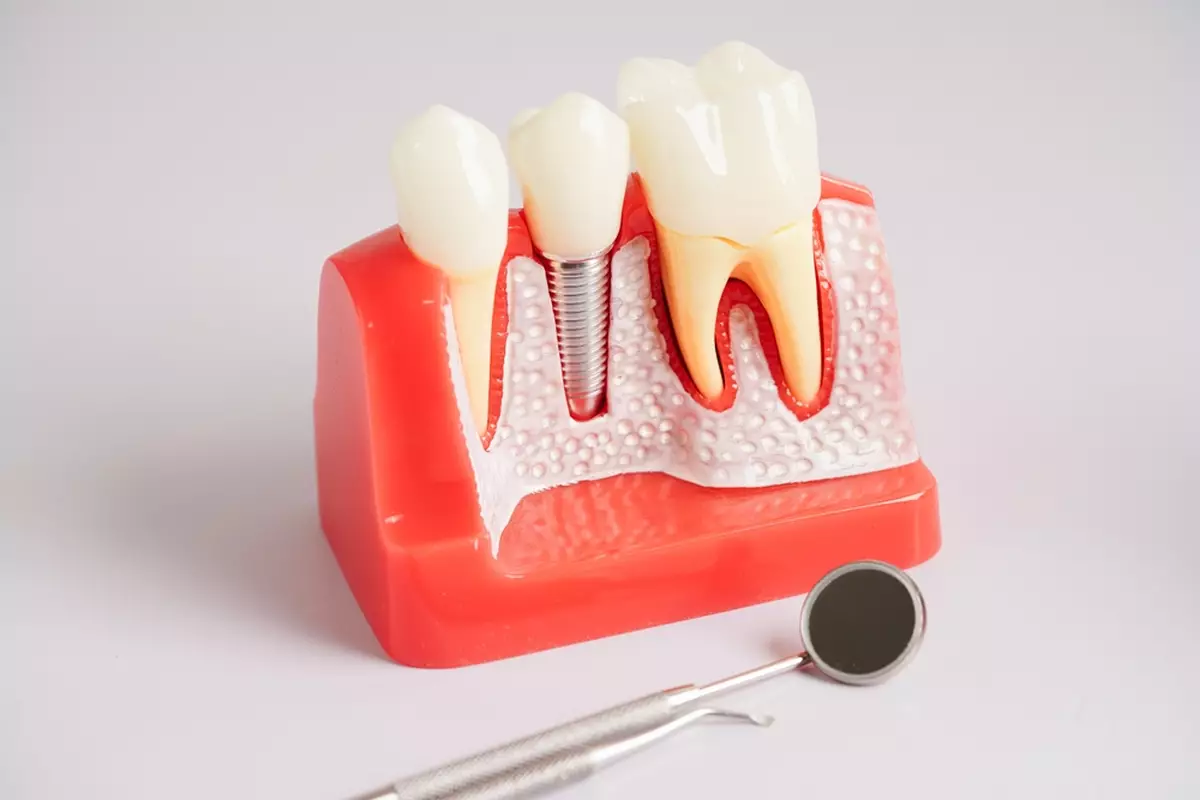
The dental implant process step by step is designed with recovery in mind. The implant post, a small titanium fixture placed into the jawbone, integrates gradually with the surrounding bone over a period of several months. This healing phase, called osseointegration, is passive. The patient experiences it without significant disruption to daily life.
Misconception 3: The Dental Implant Process Timeline Takes Too Long to Be Worth It
When patients learn that the dental implants process can span several months from start to finish, some interpret that as a reason to delay or avoid treatment altogether. This reflects a misunderstanding of what that time actually involves.
The dental implant process timeline varies depending on individual circumstances: whether a tooth extraction is required beforehand, whether the bone needs time to develop adequate density, and how many implants are being placed. For straightforward cases, the dental implant process from consultation to final crown can be completed in as few as three to four months. More complex cases may extend to six months or beyond.
What is the process for dental implants at this level of care? It begins with a comprehensive consultation and 3D imaging, proceeds through implant placement, follows the natural course of osseointegration, and concludes with the attachment of a custom-crafted porcelain crown. Each stage is deliberate. The timeline is not a flaw in the process; it is what makes the outcome predictable, durable, and indistinguishable from a natural tooth.
Misconception 4: The Cost Makes Dental Implants Inaccessible
When patients consider dental implants process and cost together, the upfront figure can feel significant. This is understandable. But the comparison most often made, between implants and less permanent alternatives, does not account for what the investment actually delivers over time.
A dental bridge, for example, requires the preparation of adjacent healthy teeth and typically needs to be replaced every ten to fifteen years. A dental implant, placed correctly and cared for properly, can last a lifetime. The implant post does not decay. It does not shift. It preserves the integrity of the jawbone in a way that no other tooth replacement can.
When reflecting on the question of “what I wish I knew before dental implants,” many patients who have undergone the procedure share a common opinion: they wish they had moved forward sooner rather than spending years in a compromised restoration that continued to affect their confidence and oral health.
When measured across decades, the dental implant procedure is among the most cost-effective and highest-value treatments in restorative dentistry. The AAID’s patient resource on the benefits of dental implants outlines this long-term value clearly for patients weighing their options.
Misconception 5: Dental Implants Have Significant Downsides That Outweigh the Benefits
What is the downside of dental implants? In the interest of complete transparency: dental implants are not suitable for everyone. Patients must have adequate bone density to support the implant post, and the health of the surrounding gum tissue must be in good condition prior to placement. Certain systemic health factors may require evaluation before proceeding.
However, these are considerations to be assessed, not automatic disqualifications. At Infinite Smiles, every patient undergoes a thorough evaluation before any treatment is proposed. If bone volume is insufficient, grafting may be recommended to build the foundation needed for a successful outcome. If gum tissue requires attention, that is addressed first.
The dental implant process, when undertaken by a skilled and experienced clinician, carries a success rate that consistently exceeds 95 percent over ten years, a figure supported by long-term peer-reviewed research published through the National Institutes of Health. For patients who are suitable candidates, very few dental solutions come close to matching the functional and aesthetic outcome that implants provide.
What Is the 3/2 Rule for Dental Implants?
The 3/2 rule is a clinical guideline used in implant planning. It holds that there should be at least 3mm of bone surrounding the implant and at least 2mm of gum tissue depth to support long-term stability and an aesthetic result at the gum line. It is one of several precision benchmarks that experienced implant clinicians use to assess candidacy and plan placement, and a reflection of the level of detail that separates a truly expert dental implant procedure from a routine one.
The Right Practice Changes Everything
The dental implants process is not inherently complicated. What makes it feel that way is the absence of clear, credible information and the presence of a provider whose standard of care does not match the seriousness of the investment.
At Infinite Smiles, the dental implant process step by step is explained thoroughly at every stage. There are no surprises, no rushed consultations, and no compromises on material quality or technique. For patients who have been waiting for the right time, the right information, or the right provider, this is where that search ends.
To learn whether dental implants are the right solution for your smile, we invite you to learn about the dental implant process and schedule a complimentary consultation with Dr. Neal Patel.
