


TL;DR: Modern porcelain crowns are the luxury standard for restoring damaged teeth, blending lifelike beauty with lasting strength. This guide explains how today’s all-ceramic restorations work, how long they last, and what to expect from a truly bespoke experience.
- Porcelain is a refined type of dental ceramic; the “porcelain vs. ceramic vs. zirconia” question is really about matching the right material to the right tooth.
- All-ceramic crowns have replaced dated metal PFM crowns, eliminating the gray line at the gum tissue and restoring natural translucency.
- With expert placement and good care, porcelain crowns typically last 10 to 15 years, and often 20 or more.
- The natural tooth beneath a crown stays alive, protected, and sealed against further damage.
- Expert shade matching and an in-house lab make same-day, indistinguishable results possible.
A beautifully restored tooth should be a secret only you and your dentist share. That is the promise of modern porcelain crowns: restorations so precisely crafted, so faithfully matched to your natural smile, that no one will ever know a tooth was damaged in the first place. For discerning patients who expect more than a functional fix, who expect artistry, porcelain has become the material of choice.
What Makes a Porcelain Tooth Crown Different
A crown is a custom-crafted covering that restores a tooth’s original strength, shape, and beauty. As the Cleveland Clinic explains, crowns are used to protect weakened teeth, restore worn or broken ones, and complete other restorations. But not all crowns are created equal, and the crown material you choose shapes everything about the result.
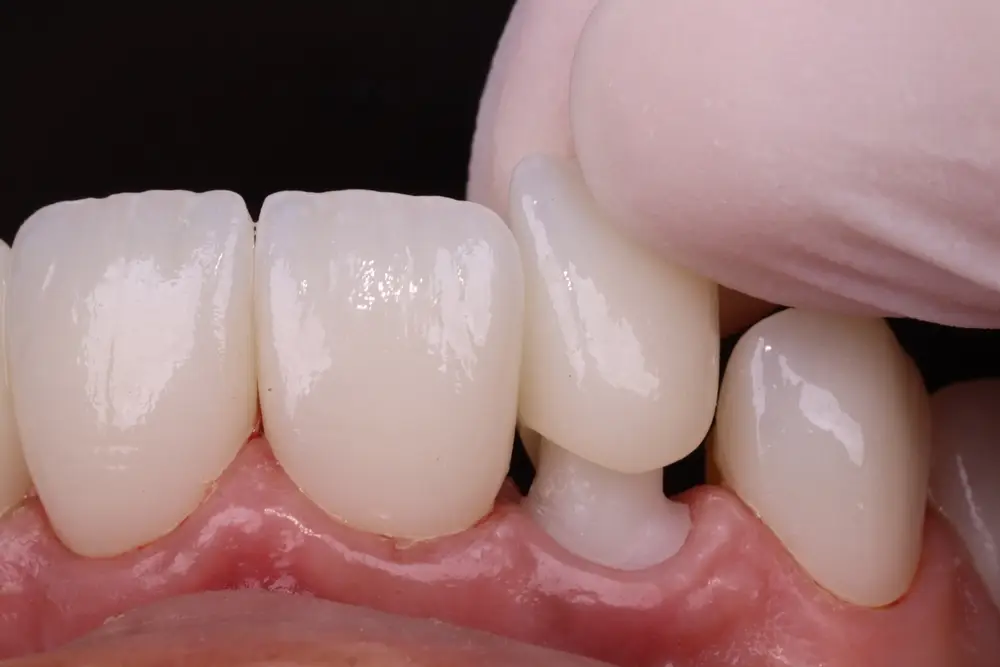
A porcelain tooth crown is prized for one reason above all others: light. Natural enamel is subtly translucent, allowing light to pass into the tooth and reflect back with depth and warmth. High-quality dental porcelain behaves the same way. Where older restorations could look flat or opaque, a modern porcelain dental crown captures the luminous, layered character of a real tooth. It is the difference between a photograph of a smile and the smile itself.
Porcelain vs. Ceramic vs. Zirconia: Choosing Well
Patients researching the best crown and deciding between porcelain vs ceramic vs zirconia, often assume these are three competing materials. In truth, porcelain is a refined type of dental ceramic, and zirconia is another member of the same ceramic family. So when people ask whether porcelain or ceramic crowns are better, the honest answer is that the question compares a masterpiece to the medium it’s painted in. What matters is selecting the right ceramic for the right tooth.
Layered porcelain and lithium disilicate ceramics offer unrivaled beauty, making them ideal for front teeth and any tooth visible when you smile. Zirconia is exceptionally strong, a wise choice for molars that endure powerful chewing forces. In a truly bespoke restoration, your dentist may even combine approaches, pairing a zirconia core with hand-finished porcelain artistry. The point is not to pick a winner; it is to have a clinician with the expertise, and the in-house laboratory, to match the material to your bite, your aesthetics, and your goals.
The Quiet Retirement of Metal PFM Crowns
For decades, the porcelain fused to metal crown was the industry standard: a metal shell for strength, veneered with porcelain for appearance. It served its era well, but metal PFM crowns carry compromises that today’s patients no longer need to accept. The metal substructure blocks light, dulling the crown’s vitality, and over time the gum tissue can recede slightly, revealing a telltale gray line at the margin, the visual signature of dated dentistry.
Modern all-ceramic crowns eliminate the metal entirely. They are kind to the gum tissue, biocompatible, and beautiful from every angle, at every age of the restoration.
How Long Do Porcelain Crowns Last?
Longevity is one of the most common questions we hear, and the answer is reassuring. So, how long do porcelain crowns last? With expert placement and attentive care, a porcelain crown typically serves faithfully for ten to fifteen years, and it is not unusual for well-made crowns to thrive for twenty years or more.
The variables that matter most are the precision of the fit, the quality of the material, and your daily habits. Gentle brushing, daily flossing, and regular professional care protect your investment for decades. In other words, a porcelain crown is not a temporary repair; it is a long-term restoration designed to be enjoyed, and forgotten about, for many years at a time.
An Honest Look at the Considerations
Even a luxury restoration deserves a candid conversation. What are the disadvantages of porcelain crowns? Porcelain, like natural enamel, can chip under extreme force. Habits like chewing ice or opening packages with your teeth are unkind to crowns and natural teeth alike. Improperly finished porcelain can also gradually wear the opposing teeth it bites against, which is why meticulous polishing and bite refinement matter so much. And placing any crown requires reshaping the tooth beneath it, a permanent step that calls for an experienced, conservative hand. In skilled hands, each of these considerations is anticipated and managed before it ever becomes a concern.
That naturally raises another question: what happens to the natural tooth under a crown? The tooth remains very much alive in most cases. It is gently reshaped to receive its new covering, then sealed beneath the crown, shielded from further wear and fracture. The crown becomes the tooth’s armor, but the margin where crown meets tooth still deserves excellent hygiene, since that junction is where decay would try to begin.
Where Science Meets Artistry
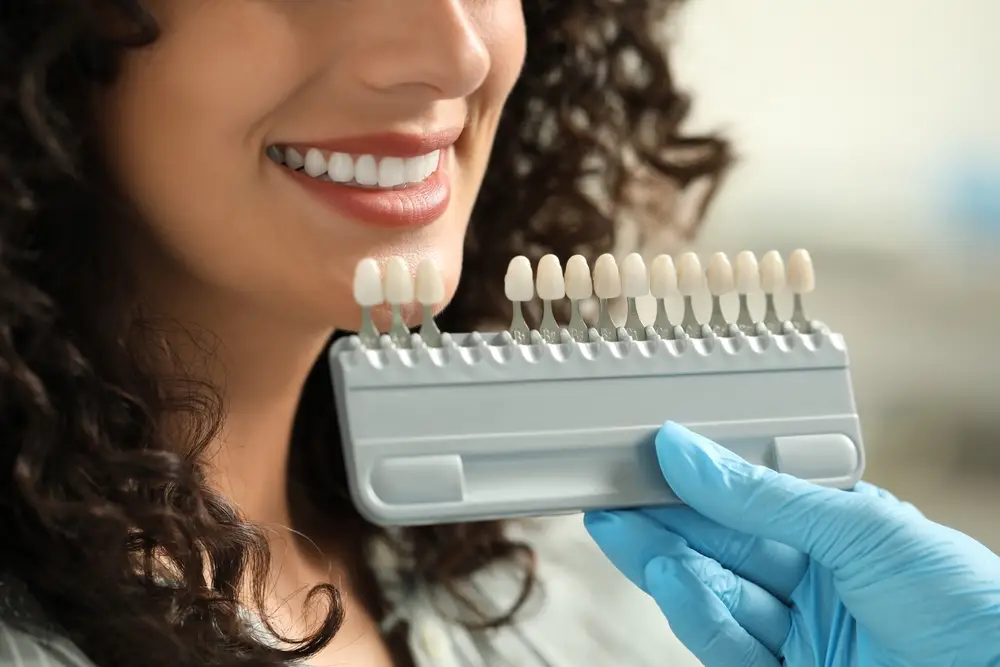
The final measure of a porcelain dental crown is whether anyone can tell it’s there. This is where shade matching becomes an art form. Rather than selecting from a handful of generic shades, a master clinician studies the subtle gradients, translucency, and surface texture of your surrounding teeth, then crafts a restoration that belongs in your smile, not merely near it.
Porcelain also integrates seamlessly with advanced treatments. When a tooth cannot be saved, a dental implant topped with a porcelain crown recreates the entire tooth, root to radiant surface, with remarkable realism.
The experience of receiving a crown should feel as refined as the crown itself. Digital scanning has replaced uncomfortable, messy impression trays, capturing your smile in exquisite detail within minutes. From that digital blueprint, your restoration is designed on screen, milled from a solid block of premium ceramic, and finished by hand with custom characterization and glazing, so the final result carries the individuality of a natural tooth rather than the uniformity of a manufactured one.
At Infinite Smiles, Dr. Neal Patel designs, mills, and finishes crowns in our own on-site laboratory, often in a single, unhurried visit, while you relax with the comforts of a five-star experience. It is restorative dentistry elevated to what it should be: precise, personal, and beautiful.
Ready to see what a truly crafted restoration looks like? Learn about porcelain dental crowns and schedule your complimentary consultation today, or browse our entire range of services to find out how we can transform your smile.
